Project Summary
Countries: Brazil
Delivery Partner: University of Lancaster
Project Partners: Manchester Metropolitan University, Oxford University, Amazon Environmental Research Institute (IPAM), Embrapa Amazônia Oriental
Principal Investigator: Professor Jos Barlow, Lancaster Environment Centre, University of Lancaster, Joice Nunes Ferreira, Embrapa Amazônia Oriental, Leonardo De Sousa Miranda, Lancaster University
Contact: jos.barlow@lancaster.ac.uk / joice.ferreira@embrapa.br / l.miranda@lancaster.ac.uk
The project advances data-driven and collaborative restoration planning in Amazonia, mapping carbon, biodiversity, ecosystem services, and climate-related risks priorities to inform policies and strengthen local capacity for evidence-based decision-making.
Challenge
Tropical forest restoration offers a powerful opportunity to address climate change, biodiversity loss, and social inequality simultaneously. Yet, identifying where and how to restore remains a major challenge in the Brazilian Amazon, where deforestation, degradation, and recurrent climate-linked threats continue to reshape landscapes.
The State of Pará, one of the Amazon’s most deforested and economically dynamic regions, faces particular difficulties in aligning restoration with land-use planning, carbon goals, and community needs. Limited integration between ecological data, spatial models, and policy implementation often results in restoration efforts that are poorly targeted.
This project tackles these gaps by combining high-resolution field data, remote sensing, and social indicators to produce spatially explicit, climate-resilient restoration strategies that maximise biodiversity and carbon benefits while supporting sustainable livelihoods across Pará.
Insight
The project addresses these challenges by integrating ecological field surveys, spatial data, and stakeholder knowledge to guide evidence-based forest restoration across Pará. The team is developing predictive models of carbon storage, biodiversity value, and climate-related risks to identify priority areas where restoration can deliver multiple environmental and social benefits.
Working closely with SEMAS-PA, the project ensures that scientific outputs directly inform state-level spatial planning and restoration policy. Early results reveal strong overlaps between high-carbon and high-biodiversity areas, indicating opportunities for synergistic interventions that deliver both climate and conservation gains. The project also strengthens local technical capacity and fosters inclusive governance by engaging universities, research agencies, and community representatives in the co-production strategies that can sustain restoration outcomes beyond the project’s lifetime.
Collaboration
The project is built on a strong partnership between Lancaster University (UK) and leading Brazilian research institutions, Embrapa Amazônia Oriental, IPAM – Instituto de Pesquisa Ambiental da Amazônia, and Universidade Federal Rural da Amazônia (UFRA), working in close collaboration with the Secretaria de Meio Ambiente e Sustentabilidade do Pará (SEMAS-PA).
Together, these organisations integrate expertise in ecology, remote sensing, and social science to generate practical, policy-relevant outputs. The collaboration draws on existing networks established through the Rede Amazônia Sustentável (RAS) and the CAPOEIRA project. This partnership ensures scientific rigour and local engagement, critical to scaling restoration efforts and embedding the project’s results into long-term environmental policy.
What makes this project unique is the strength of its partnerships. Scientists, policymakers, and local actors working together to design restoration strategies that are both scientifically sound and inclusive. It’s an example of co-produced science driving real-world change in the Amazon.
What makes this project unique is the strength of its partnerships. Scientists, policymakers, and local actors working together to design restoration strategies that are both scientifically sound and inclusive. It’s an example of co-produced science driving real-world change in the Amazon.
Discover More
Professor Jos Barlow
Professor Jos Barlow’s research examines how human activities impact tropical forest biodiversity and the ecosystem functions and services it provides. Working in the Brazilian Amazon since 1998, he is co-founder of the Sustainable Amazon Network (Rede Amazônia Sustentável – RAS), which brings together scientists, practitioners, and local stakeholders to understand the environmental and socio-economic trade-offs shaping one of the world’s largest remaining tropical forests.
Dr Joice Ferreira
Dr Joice Ferreira is a senior researcher and co-founder of the Sustainable Amazon Network (RAS). Her research focuses on the interface between land use, forest resilience, and the provision of environmental services in the Amazon. She adopts a socio-ecological systems approach to study how ecosystem conservation and biodiversity protection can be reconciled with sustainable development in tropical landscapes.
Dr Leonardo Miranda
Dr Leonardo Miranda is a biodiversity data scientist specialising in geospatial analysis and ecological modelling. His work bridges field-based ecology with computational tools to generate insights that inform conservation planning, ecosystem restoration, and climate adaptation. His research primarily focuses on biodiversity and ecosystem services in the Amazon.
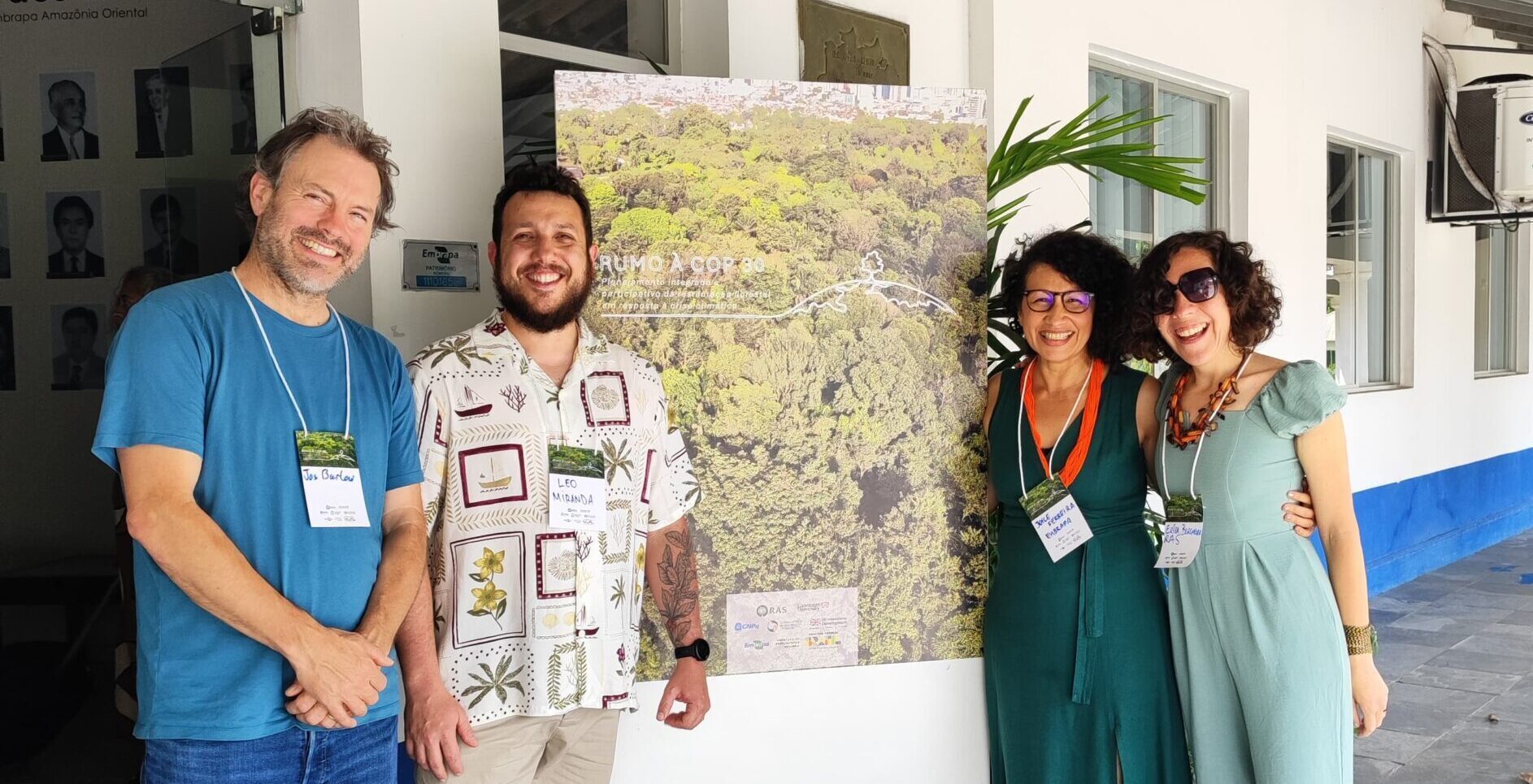
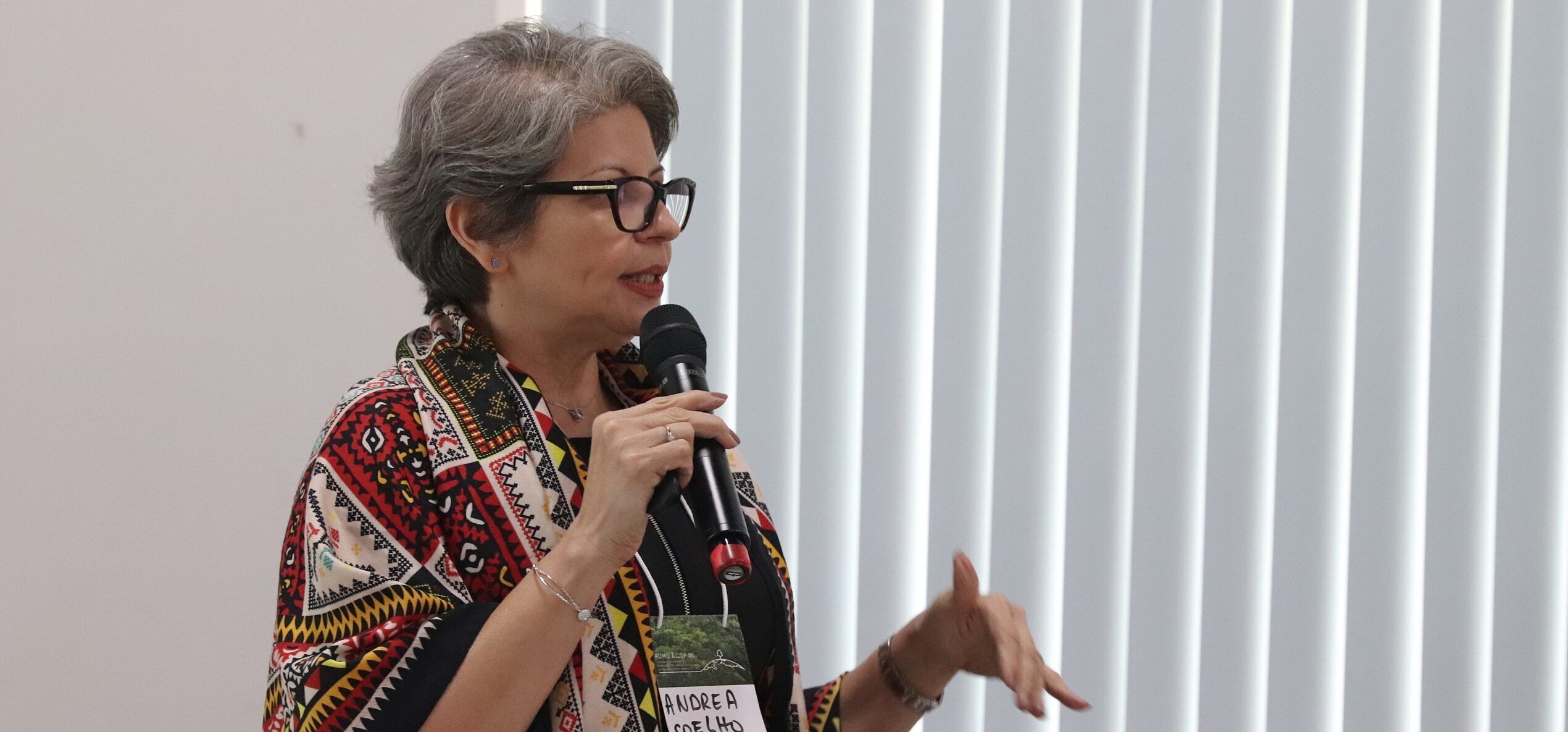
Images: 1) From left to right, Jos Barlow (Lancaster University), Leonardo Miranda (Lancaster University) 2) Andrea Coelho (SEMAS-PA) presenting perspectives from Pará State’s restoration strategy.